
Why Is My Water Bill So High All of a Sudden?
A water bill that jumps suddenly is not a billing mystery to shrug at — it is data. If you are asking "why is my water bill so high?", the short version is this: your meter measure…
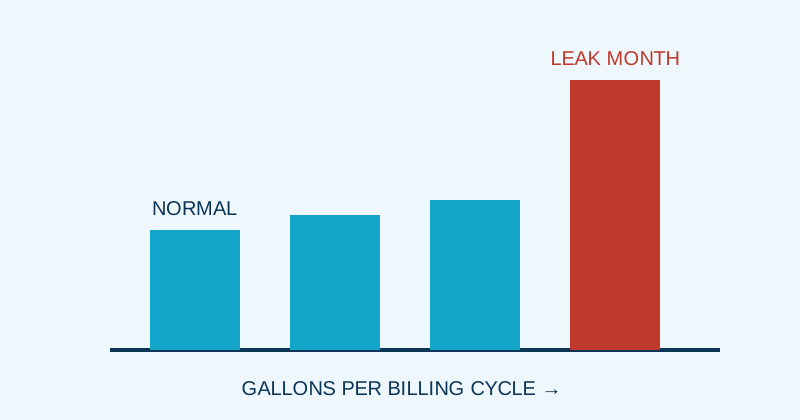
A water bill that jumps suddenly is not a billing mystery to shrug at — it is data. If you are asking "why is my water bill so high?", the short version is this: your meter measured water your household did not knowingly use, and in Clermont homes the cause is findable in most cases within an hour of simple checks. This guide ranks the causes the way a leak detection specialist works through them: hidden leaks first, because they run around the clock; then irrigation and pools, Clermont's two biggest seasonal wasters; then fixtures and appliances; and finally the billing explanations that are real but rarer than people hope.
First, read the bill the right way
Compare usage, not dollars. Your bill shows gallons consumed and the number of days in the cycle; rates and sewer charges can move the total even when usage is flat. Compare this cycle's gallons per day with the same season last year if you have it — irrigation and pool evaporation make summer-to-summer the fair comparison in Florida.
Then size the problem. A bill 10–15% up can be guests, a hot month, or a longer cycle. A jump of 30% or more, or several thousand extra gallons, almost always has a physical cause. A single running toilet can waste 200 gallons a day; a pressurised line leak, thousands of gallons a month. The size of the jump tells you how hard to look — and the checks below are ordered to match.
Hidden leaks: the cause that never sleeps
The number-one cause of a sudden, unexplained jump is a leak you cannot see: a toilet flapper passing water silently into the bowl, a water line leaking under the slab, the main line between meter and house, or an irrigation line underground. What they share is that they run when you are asleep, at work, and on holiday — which is why the increase arrives all at once on the bill rather than creeping.
The meter test separates 'leak' from 'usage' in 15 minutes. With every tap and appliance off and irrigation shut down, watch the meter: if the dial or leak indicator still moves, water is leaving the system somewhere. That single result turns a vague worry into a defined job — isolate house from yard, hot side from cold, and the guilty line identifies itself. Here is how that isolation process works in detail.
Irrigation and pools: Clermont's seasonal wasters
In Clermont's HOA communities, irrigation is the second suspect for a reason. A broken sprinkler head can lose hundreds of gallons per cycle, a stuck valve runs a zone until someone notices, and a cracked lateral line leaks underground while the lawn still looks fine. Reclaimed-water systems have their own meters — and their own bills — so check both if your home has them.
Pools waste quietly too. A pool losing water to a pool leak — at the skimmer, a return line, or a fitting — gets refilled by hand or by an auto-fill that hides the loss completely while the water bill records it. If your bill jumped and you have been topping the pool up more than usual, or your auto-fill runs often, do the bucket test before assuming evaporation.
Fixtures, appliances — and the honest billing causes
Work the cheap checks before concluding anything. Put food colouring in each toilet tank and wait 15 minutes: colour in the bowl means a flapper leak. Check the water heater's pressure-relief valve and drain pan, look under every sink, and inspect washing-machine and refrigerator supply lines. A softener or filtration system stuck in regeneration can also pass surprising volumes straight to drain.
Finally, the billing explanations: a longer read cycle, a rate or sewer-charge increase, an estimated previous bill corrected by an actual read, or a new occupant or appliance. Call the utility and ask — but ask after the meter test. If the meter moves with the house off, no billing explanation accounts for it, and the leak hunt is the right spend. Many utilities, including city utilities in Central Florida, consider a one-time leak adjustment when a repaired leak is documented — a written detection report is exactly the evidence that supports one, so keep it.
Do the maths: what a 'small' leak actually costs
Gallons make the problem concrete. A toilet passing 200 gallons a day — a leak you may never hear — adds about 6,000 gallons a month. A pinhole in a pressurised line at just half a gallon a minute adds over 21,000 gallons a month, more than many Clermont households use in total. The U.S. EPA puts the average home's total leak waste at more than 10,000 gallons a year and notes that fixing easily corrected leaks can cut a water bill by about 10 percent — hidden, pressurised leaks sit far above that average, which is why a 30–50% jump is treated as a leak until proven otherwise.
Run your own version of the maths before you call anyone: take the excess gallons on this bill, divide by the days in the cycle, and you have the leak's approximate daily rate. A rate that matches a toilet (100–300 gallons a day) points indoors. A rate in the thousands points to a pressurised line, irrigation main, or pool auto-fill — and straight to professional isolation testing.
The 60-minute high-bill check
- Compare gallons per day with the same season last year
- Meter test: 15 minutes, everything off — is it still moving?
- Dye-test every toilet tank for a silent flapper leak
- Run each irrigation zone and look for broken heads, bubbling, soggy lines
- Check pool level and auto-fill behaviour; bucket test if in doubt
- Inspect the water heater, under-sink lines, and laundry supplies
- Still unexplained? The leak is hidden — book detection, not guesswork
High bills in Clermont, specifically
Clermont stacks the deck: year-round irrigation in communities like Kings Ridge and Heritage Hills, a pool behind a large share of homes, slab construction that hides supply-line leaks, and sandy soil that swallows main-line leaks without a puddle. The pattern specialists see here is a bill that jumps one cycle and stays up — the signature of something running continuously. Underground and water line leak detection isolate which system is responsible in a single visit, and the written location report doubles as documentation if you ask the City of Clermont about a leak adjustment.
Sources and further reading
U.S. EPA WaterSense — leak facts, meter checks and the toilet dye test
High Water Bill Causes — FAQs
How much of an increase counts as abnormal?
Can a toilet really raise the bill that much?
Will the city reduce my bill if it was a leak?
The meter test shows movement but I cannot find anything. Now what?
Think you have a leak in Clermont?
The longer a hidden leak runs, the more damage it does. Call now and get connected with a Clermont leak detection specialist.
Call +1 (352) 716-1109★ 4.9 from 150+ local reviews · Licensed specialists · Open 24/7 · Delivers the best
Related Leak Detection Services
Underground Leak Detection
The main water line running from your meter to your house crosses your yard underground — and when it leaks, t…
Water Line Leak Detection
Water lines branch through your whole house — under the slab, inside walls, and across the attic. Water line l…
Irrigation Leak Detection
Irrigation leaks are Clermont's silent water bill killers — a broken head, a cracked lateral line, or a stuck …
More Leak Detection Guides
7 Signs of a Slab Leak in Your Florida Home
A slab leak is a pressurised water line leaking under your home's concrete foundation. It rarely announces its…
Pool Skimmer Replacement Cost in Florida
The skimmer is the hardest-working fitting in a Florida pool — and one of the most common leak points. It is a…