
How Does Leak Detection Work? Acoustic vs Thermal Imaging
'Non-invasive leak detection' sounds like a promise. So how does leak detection work in practice? This guide explains the actual method behind it, because the method is why it work…
'Non-invasive leak detection' sounds like a promise. So how does leak detection work in practice? This guide explains the actual method behind it, because the method is why it works. A detection specialist does not wander the house with one magic wand. They run a sequence: isolate the plumbing into sections until the leaking section is cornered, then pinpoint within it using sound, temperature, moisture, pressure, or a camera — whichever fits the pipe and the place. Acoustic listening and thermal imaging get the headlines, so they get the closest look here, along with honest notes on what each can and cannot do.
Step one is not a gadget: it is isolation
Every professional detection starts with questions and valves, not electronics. When did the bill change? Where are the symptoms? Then pressure testing splits the system: the house is isolated from the street main, hot lines from cold, irrigation from domestic, pool plumbing from the shell. Each test that holds pressure clears a section; the section that cannot hold pressure contains the leak.
This unglamorous stage is most of the accuracy. It converts 'somewhere in 200 feet of pipe' into 'this 15-foot run,' and it prevents the classic failure mode of leak hunting — finding a wet spot and assuming the leak is under it, when water has travelled along a pipe or a slab edge from somewhere else entirely. Only once the section is cornered do the pinpointing tools come out.
Acoustic listening: hearing water escape
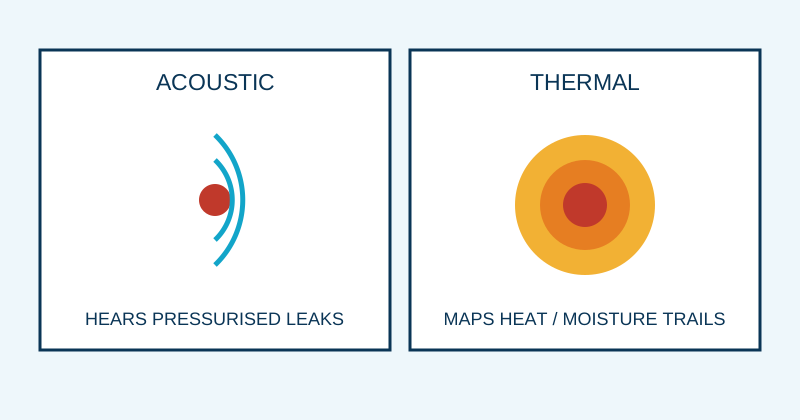
A pressurised leak makes noise: water forcing through a crack or pinhole vibrates the pipe and the surrounding material, producing a hiss or whoosh that travels along the pipe and through concrete and soil. Acoustic equipment — sensitive ground microphones and listening discs, amplified and filtered — lets a trained operator survey along the pipe's path and mark where the leak noise peaks. That peak is the leak, typically within a small area.
Acoustic is the workhorse for slab and underground lines precisely because it works through slab, soil, and driveway. Its limits are real: it needs system pressure (a drain leak at rest is silent), moving water elsewhere in the house adds noise, and very deep or heavily insulated lines are quieter. This is why it is paired with the next method rather than used alone.
Thermal imaging: seeing the water's temperature trail
A thermal camera does not see water — it sees surface temperatures, and water changes them. A hot line leaking under a floor warms the slab in a plume above the leak; a cold line chills it; moisture evaporating from drywall or flooring cools the surface in the shape of the wet area. On the camera, a leak stops being invisible and becomes a picture: a hot bloom on tile, a cold trail snaking down a wall cavity's surface.
Thermal excels at mapping — showing the true extent of wet material, tracing a hot line's route through a slab, and checking whether a ceiling stain's wet pattern points to the bathroom above or the roof. Its limits complement acoustic's: it reads surfaces, not depth, and sunlight, HVAC airflow, and recently used hot water can paint misleading pictures. Used together — acoustic to pinpoint, thermal to map and corroborate — the two methods cross-check each other before anyone marks a floor. Moisture meters complete the picture by confirming, with a number, that a suspect patch is genuinely wet.
Pressure, dye, and cameras: the supporting methods
Pools and drains need different physics. Pool plumbing is pressure-tested line by line; fittings, skimmers, and lights are dye-tested — a bead of dye released near a suspect joint is visibly drawn in if water is leaving there. These two tests are how a pool leak is assigned to shell, fitting, or line rather than guessed at — the same logic behind the bucket test you can run yourself first.
Sewer and drain lines carry no pressure to listen to, so they are inspected by eye: a camera on a flexible rod travels the line from the cleanout, recording cracks, roots, and separated joints with their distance, which is the whole method behind sewer line leak detection. The common thread across every method is the sequence — isolate, pinpoint, confirm — and a written location you can hand to whoever does the repair.
Acoustic vs thermal vs the rest: which method finds which leak
Match the method to the leak and the sequence makes sense. Pressurised supply lines — slab, wall, and underground mains — are acoustic territory first, because escaping water under pressure is audible, with thermal imaging mapping the warm or wet area around the pinpoint. Pools split by component: pressure testing for the plumbing, dye for the shell and fittings. Sewers and drains, carrying no pressure, belong to the camera. A specialist who reaches for one tool for every leak type is selling the tool, not the diagnosis.
There is also a quiet economic point. Each method exists to shrink the repair opening: acoustic and thermal together typically narrow a slab leak to a small section of floor, a camera turns 'somewhere in 40 feet of sewer' into a marked spot in the yard, and dye testing can acquit a skimmer that a guess would have replaced. The detection fee is, in effect, buying down the demolition and the wrong-repair risk — which is why 'how does leak detection work' is really a question about evidence, not gadgets.
What a detection visit actually does, in order
- Interview and symptom review: bill, sounds, stains, pool loss pattern
- Meter check and pressure testing to prove a leak exists
- Isolation: house vs yard, hot vs cold, zone vs zone, line vs shell
- Pinpointing with acoustic listening and/or thermal imaging
- Moisture confirmation at the marked spot
- Dye or camera testing where pools or sewers are involved
- A marked location and a plain-language explanation of repair options
Detection in Clermont homes, specifically
Clermont's construction makes the combined method matter. Slab homes across Kings Ridge, Summit Greens, and Greater Pines hide lines under concrete that thermal reads well and acoustic hears through; the high water table near Lake Minneola can mask underground leaks at the surface, which is why meter and pressure evidence leads and surface clues follow; and the pool behind so many Clermont homes adds dye and pressure testing to the same visit. One call to slab, pool, or sewer detection starts the same sequence regardless of leak type: isolate first, pinpoint second, open nothing until the mark is made.
Sources and further reading
U.S. EPA WaterSense — checking for leaks with your meter
How Leak Detection Works — FAQs
How accurate is leak detection, really?
Does detection damage floors or walls?
Can thermal imaging see through concrete?
How long does a detection visit take?
Think you have a leak in Clermont?
The longer a hidden leak runs, the more damage it does. Call now and get connected with a Clermont leak detection specialist.
Call +1 (352) 716-1109★ 4.9 from 150+ local reviews · Licensed specialists · Open 24/7 · Delivers the best
Related Leak Detection Services
Slab Leak Detection
A slab leak is a water line leaking beneath your home's concrete foundation — one of the most damaging leaks a…
Pool Leak Detection
In Clermont, a pool is part of the house — and a leaking pool loses far more than water. Pool leak detection t…
Sewer Line Leak Detection
Sewer leaks hide underground and inside walls, announcing themselves through smells, slow drains, and wet spot…
More Leak Detection Guides
7 Signs of a Slab Leak in Your Florida Home
A slab leak is a pressurised water line leaking under your home's concrete foundation. It rarely announces its…
Why Is My Water Bill So High All of a Sudden?
A water bill that jumps suddenly is not a billing mystery to shrug at — it is data. If you are asking "why is …